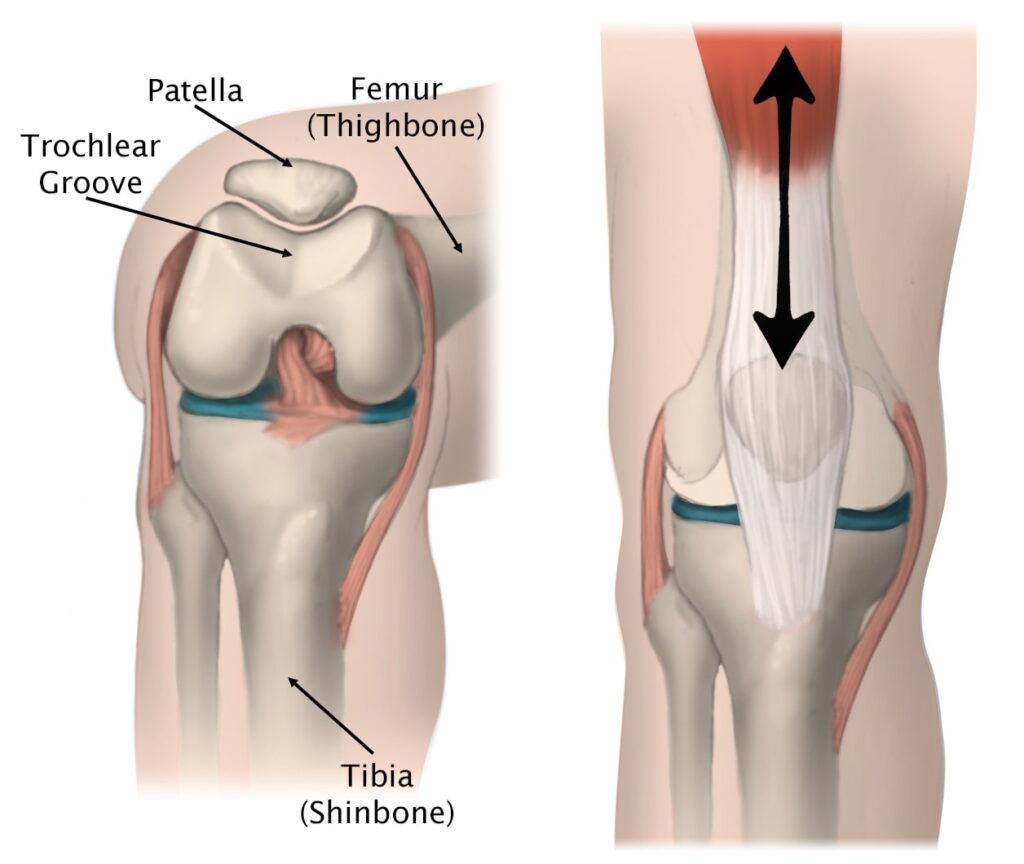
Your health care provider might ask about your history of knee problems, press on your knee and move your leg into a variety of positions.
Sometimes imaging tests can help find the cause of knee pain. Tests might include:
Treatment of patellofemoral pain often begins with simple measures. Rest the knee as much as possible. Try not to do things that increase the pain, such as climbing stairs, kneeling or squatting.
If needed, take pain relievers you can get without a prescription. These include acetaminophen (Tylenol, others), ibuprofen (Advil, Motrin IB, others) and naproxen sodium (Aleve). Don’t take them for more than 2 to 3 weeks.
A physical therapist might suggest:
If simple treatments don’t relieve pain, a health care provider might suggest:
You might start by seeing your primary care provider. Or you might be referred to a physical medicine and rehabilitation specialist, also known as a physiatrist, a physical therapist, an orthopedic surgeon or a sports medicine specialist.
Here’s information to help you get ready for your appointment.
Before your appointment, make a list of the following:
Take a family member or friend along, if possible, to help you remember the information you’re given. Also, if you’ve had X-rays or other imaging tests of your knees, try to bring copies of them to your appointment.
For patellofemoral pain syndrome, questions to ask include:
Ask any other questions you have.
Be prepared to answer questions, such as:
Aenean porta orci nam commodo felis hac ridiculus fusce fames maximus erat sed dictumst blandit arcu suspendisse sollicitudin luctus in nec