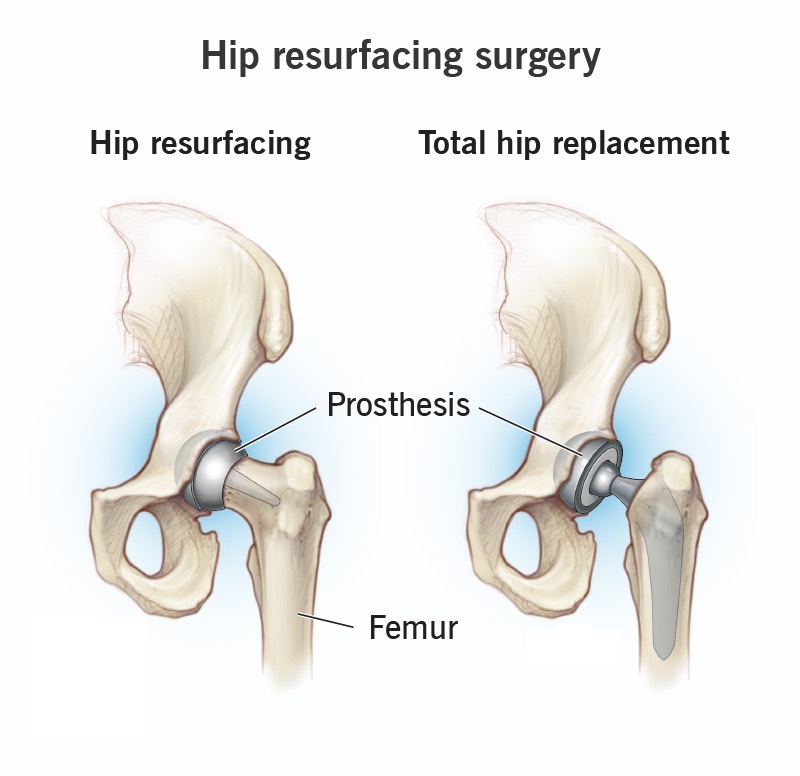
Hip resurfacing surgery is an alternative to a total hip replacement for some people who have severe hip pain and stiffness. Instead of replacing your whole hip joint, your surgeon replaces your hip socket (acetabulum), and then surgically re-shapes the top of your thigh bone (femur) to fit securely into the prosthetic.
Hip resurfacing is surgery to repair damage inside your hip joint. Healthcare providers sometimes call it a hip resurfacing arthroplasty.
Resurfacing is similar to a hip replacement (arthroplasty), but it involves replacing less of your natural hip joint. Your surgeon will replace only your hip socket (acetabulum) with a prosthetic piece. Then, they’ll trim and reshape (resurface) the head of your thigh bone (femur) to fit securely into the prosthetic acetabulum.
A healthcare provider might recommend hip resurfacing surgery if you have severe symptoms that don’t get better after trying nonsurgical treatments like activity modifications, physical therapy or medications. Symptoms that can cause you to need resurfacing can include:
Arthritis is the most common reason people need hip resurfacing. Most people who choose to have resurfacing surgery have osteoarthritis, but some people with rheumatoid arthritis may need it, too.
Not everyone is a good candidate for hip resurfacing. Because your surgeon won’t replace your entire hip joint, your bone health is more of a factor than in hip replacement. Specifically, your femur needs to be strong and healthy enough to be resurfaced.
In general, good candidates for hip resurfacing include people who:
Your healthcare provider or surgeon will help you get ready for surgery. You might need:
Tell your provider and surgeon about any medications and over-the-counter supplements you take. You may have to stop taking them before your surgery.
Your surgeon will tell you when you should stop eating and drinking the day before your surgery. Most people need to avoid eating and drinking eight hours before their surgery. Your surgeon will also tell you which medications are safe to take with a sip of water the morning of your surgery.
On the day of your surgery, you’ll receive anesthesia to numb your body and make sure you don’t feel any pain. An anesthesiologist will give you either general anesthesia to put you to sleep or a regional anesthesia to numb the area around your hip. They may give you other medications to make you sleep if you need regional anesthesia.
During a hip resurfacing, your surgeon will:
Hip resurfacing surgery usually takes two to three hours. It may take more or less time depending on how damaged your natural hip joint is and which kind of prosthetic your surgeon uses.
After surgery, you’ll be moved to a recovery room. Your surgery team will keep an eye on you for a few hours to make sure you wake up from the anesthesia without complications. They’ll also monitor your vital signs and pain level.
Most hip resurfacing surgeries are outpatient procedures. That means you can go home the same day. Your surgical care team will perform a medical exam and physical therapy assessment before they say it’s safe for you to go home.
The most obvious benefit of hip resurfacing is how much it can improve your quality of life. People who have a successful hip resurfacing usually experience noticeably reduced pain, improved mobility and increased strength. You should be able to resume all of your favorite physical activities once you recover.
Other benefits of hip resurfacing can include:
Hip resurfacing is usually a safe, effective procedure. But some risks are possible, including:
Hip resurfacing shares the same risks as any type of surgery. Rare complications include:
Your surgeon will tell you what you can expect after your surgery and how you can reduce your chances of experiencing complications.
Aenean porta orci nam commodo felis hac ridiculus fusce fames maximus erat sed dictumst blandit arcu suspendisse sollicitudin luctus in nec