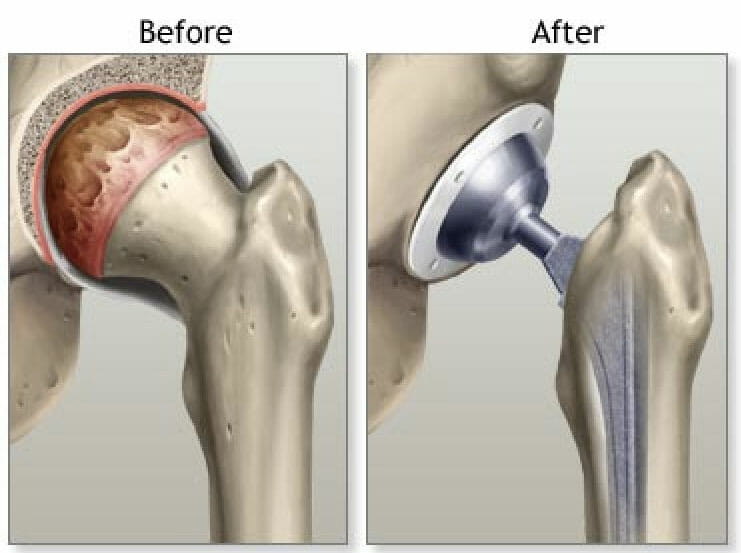
Hip replacement is surgery to remove damaged sections of the hip joint and replace them. Replacement parts are usually made of metal, ceramic and hard plastic. This artificial joint, called a prosthesis, helps reduce pain and improve function.
Hip replacement also is called total hip arthroplasty. Hip replacement might be an option if hip pain interferes with daily activities and nonsurgical treatments haven’t helped or are no longer effective. Arthritis damage is the most common reason to need hip replacement.
Conditions that can damage the hip joint, sometimes making hip replacement necessary, include:
Hip replacement may be an option if hip pain:
Risks associated with hip replacement can include:
Artificial hip parts might wear out eventually, especially for people who have hip replacement surgery when they’re relatively young and active. If this happens, you might need a second hip replacement. However, new materials are making implants last longer.
Before the operation, you’ll likely have an exam with the orthopedic surgeon. The surgeon may:
During this appointment, ask any questions you have about the procedure. Be sure to find out which medicines you should avoid or continue to take in the week before surgery.
Because smoking can interfere with healing, it’s best to stop using nicotine products, including vaping, before surgery. If you need help quitting, talk with your healthcare professional.
When you check in for your surgery, you’re asked to remove your clothes and put on a hospital gown. You’re given either a spinal block, which numbs the lower half of your body, or a general anesthetic, which puts you into a sleeplike state.
Your surgeon might also inject a numbing medicine around nerves or in and around the joint to help block pain after your surgery.
The surgical procedure can usually be completed within two hours. To perform a hip replacement, the surgeon:
After surgery, you are moved to a recovery area for a few hours while the anesthetic wears off. Medical staff monitor your blood pressure, pulse, alertness, pain or comfort level, and need for medicines.
You’re asked to breathe deeply, cough or blow into a device to help keep fluid out of your lungs. How long you stay after surgery depends on your individual needs. Many people can go home that same day.
After hip replacement, you’re at increased risk of blood clots in your legs for a short time. Possible measures to prevent this complication include:
Daily activity and exercise can help you regain the use of your joint and muscles. A physical therapist can recommend strengthening and mobility exercises. The therapist also can help you learn how to use a walking aid, such as a walker, a cane or crutches. As therapy goes on, you slowly increase the amount of weight you put on your leg until you’re able to walk without assistance.
Before you leave the hospital, you and your caregivers get tips on caring for your new hip. For a smooth transition:
Full recovery from a hip replacement varies from person to person, but most people are doing well three months after the surgery. Improvements typically continue during the first year after surgery.
The new hip joint can reduce pain and increase the hip’s range of motion. But don’t expect to do everything you could do before the hip became painful.
High-impact activities, such as running or playing basketball, might be too stressful on the artificial joint. But in time, most people can participate in lower impact activities — such as swimming, golfing and bicycle riding.
Aenean porta orci nam commodo felis hac ridiculus fusce fames maximus erat sed dictumst blandit arcu suspendisse sollicitudin luctus in nec