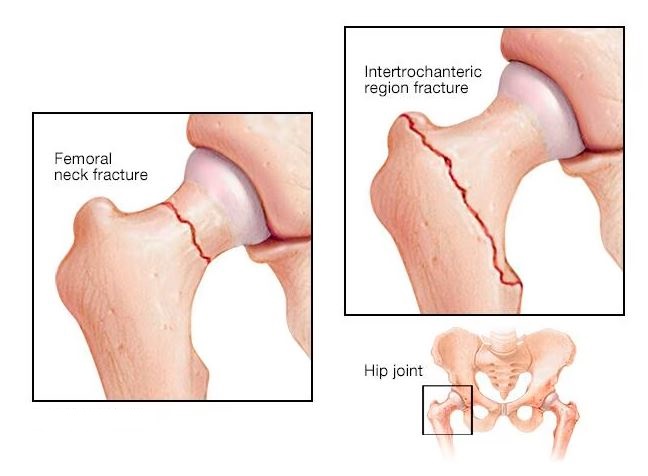
A health care provider can often diagnose a hip fracture based on symptoms and the abnormal position of the hip and leg. An X-ray usually will confirm the fracture and show where the fracture is.
If your X-ray doesn’t show a fracture but you still have hip pain, your provider might order an MRI or bone scan to look for a hairline fracture.
Most hip fractures occur in one of two locations on the long bone that extends from the pelvis to your knee (femur):
Treatment for hip fracture usually involves a combination of prompt surgical repair, rehabilitation, and medication to manage pain and to prevent blood clots and infection.
The type of surgery generally depends on where and how severe the fracture is, whether the broken bones aren’t properly aligned (displaced), and your age and underlying health conditions. Options include:
Surgeons may recommend a full or partial hip replacement if the blood supply to the ball part of the hip joint was damaged during the fracture. That type of injury, which occurs most often in older people with femoral neck fractures, means the bone is less likely to heal properly.
Physical therapy will initially focus on range-of-motion and strengthening exercises. Depending on the type of surgery and whether there’s help at home, going to an extended care facility might be necessary.
In extended care and at home, an occupational therapist teaches techniques for independence in daily life, such as using the toilet, bathing, dressing and cooking. An occupational therapist will determine if a walker or wheelchair might be needed to regain mobility and independence.
You may be referred to an orthopedic surgeon.
Your health care provider might ask:
Aenean porta orci nam commodo felis hac ridiculus fusce fames maximus erat sed dictumst blandit arcu suspendisse sollicitudin luctus in nec