Kamala Devi Hospital

Amputation (in severe trauma or diabetic complications)

Amputation in Severe Trauma and Diabetic Complications

Amputation (in severe trauma or diabetic complications)

Introduction

Amputation is a surgical procedure involving the removal of a limb or part of a limb. It is often considered a last resort when limb salvage is not possible or when the limb poses a threat to the patient’s life or overall health. Two common indications for amputation are severe trauma and complications arising from diabetes mellitus. Both conditions can lead to irreversible damage to tissues, infection, and compromised blood supply, necessitating removal of the affected part to save the patient and improve quality of life.

This article explores the indications, types, surgical techniques, and postoperative care related to amputation in the context of severe trauma and diabetic complications.

Indications for Amputation

1. Severe Trauma

  • Crush injuries: Extensive soft tissue, vascular, and bone damage.
  • Open fractures with contamination: High risk of infection and non-viable tissue.
  • Irreparable neurovascular injury: Loss of blood supply or nerve function.
  • Compartment syndrome: When fasciotomy fails to restore circulation.
  • Multiple injuries: When limb salvage would delay life-saving treatment.

2. Diabetic Complications

  • Peripheral arterial disease (PAD): Leading to critical limb ischemia.
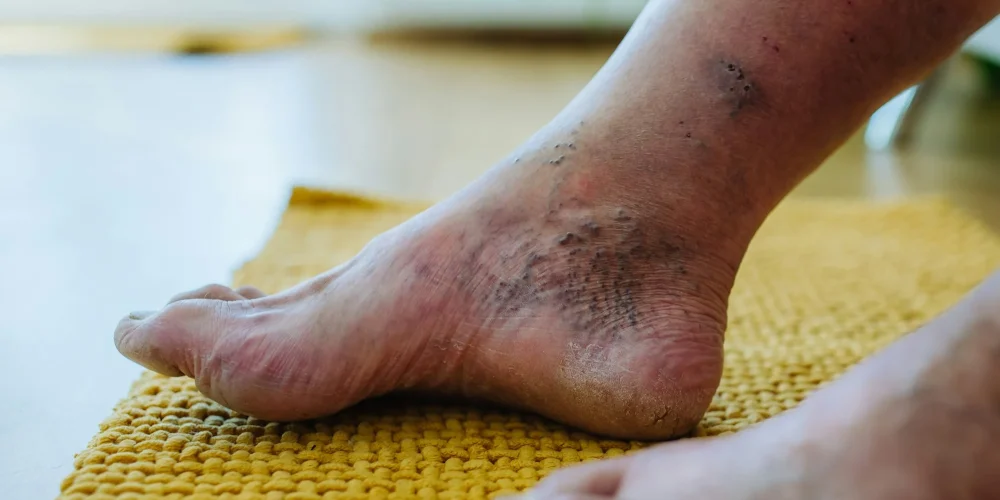
  • Diabetic foot ulcers: Non-healing wounds prone to infection.
  • Osteomyelitis: Bone infection resistant to medical treatment.
  • Gangrene: Tissue necrosis due to ischemia or infection.
  • Charcot foot deformity: Severe structural damage causing instability.

Preoperative Assessment and Planning

Clinical Evaluation

  • Detailed history including trauma mechanism or diabetic history.
  • Physical examination assessing limb viability, infection, and vascular status.
  • Neurological assessment to determine sensory and motor function.

Imaging and Laboratory Studies

  • X-rays: To evaluate bone involvement and fractures.
  • Doppler ultrasound or angiography: To assess blood flow.
  • MRI or bone scan: For detecting osteomyelitis.
  • Blood tests: Including glucose control, infection markers, and organ function.

Multidisciplinary Approach

  • Collaboration with trauma surgeons, vascular surgeons, endocrinologists, infectious disease specialists, and rehabilitation teams.
  • Optimization of medical conditions such as blood sugar control and infection management.

Types of Amputation

The level of amputation is determined by the extent of tissue damage, infection, and vascular supply. The goal is to remove all non-viable tissue while preserving as much limb length and function as possible.

Upper Limb Amputations

  • Fingertip or ray amputation: For localized injury or infection.
  • Transmetacarpal amputation: Removal of part of the hand.
  • Below elbow amputation (forearm): Preserves elbow function.
  • Above elbow amputation: When injury or infection extends proximally.

Lower Limb Amputations

  • Toe or partial foot amputation: For localized diabetic ulcers or trauma.
  • Transtibial amputation (below knee): Most common level preserving knee joint.
  • Transfemoral amputation (above knee): When below knee amputation is not feasible.
  • Hip disarticulation or hemipelvectomy: Rare, for extensive proximal disease.

Surgical Technique

General Principles

Steps in Amputation

  • Incision and flap design: Based on the level and condition of tissues.
  • Dissection: Identification and ligation of blood vessels and nerves.
  • Bone transection: Using saws or osteotomes.
  • Soft tissue management: Muscle stabilization and flap closure.
  • Drain placement: If necessary to prevent hematoma.
  • Closure: Layered suturing ensuring tension-free wound.

Special Considerations in Diabetic Patients

  • Meticulous debridement of infected tissue.
  • Extended antibiotic therapy.
  • Attention to wound healing potential.
  • Possible staged procedures if infection is extensive.

Postoperative Care

Immediate Care

  • Pain management using multimodal analgesia.
  • Monitoring for bleeding, infection, and vascular compromise.
  • Limb elevation to reduce swelling.
  • Early mobilization as tolerated.

Rehabilitation

  • Physical therapy focusing on strength, range of motion, and mobility.
  • Prosthetic fitting and training to restore function.
  • Psychological support to address body image and adaptation.

Complications to Monitor

  • Wound infection or dehiscence.
  • Phantom limb pain or sensation.
  • Stump neuroma formation causing pain.
  • Contractures due to improper positioning.
  • Deep vein thrombosis (DVT).

Outcomes and Prognosis

  • Early and appropriate amputation can be life-saving.
  • Preservation of limb length and function improves rehabilitation potential.
  • Diabetic patients require ongoing care to prevent contralateral limb complications.
  • Advances in prosthetics have significantly enhanced quality of life post-amputation.

Conclusion

Amputation remains a critical surgical intervention in cases of severe trauma and diabetic complications where limb salvage is not possible. Successful outcomes depend on careful patient selection, meticulous surgical technique, and comprehensive postoperative care including rehabilitation and psychological support. Multidisciplinary management is essential to optimize patient recovery and reintegration into daily life.

Welcome to KamalaDevi Hospital

Aenean porta orci nam commodo felis hac ridiculus fusce fames maximus erat sed dictumst blandit arcu suspendisse sollicitudin luctus in nec

Make an Appointment.