Kamala Devi Hospital

What is X-ray?

X-rays are a form of electromagnetic radiation widely used in medicine to create images of the inside of the body. Since their discovery in 1895 by Wilhelm Conrad Roentgen, X-rays have revolutionized diagnostic medicine by allowing healthcare professionals to visualize bones, organs, and other internal structures non-invasively. This technology is crucial for diagnosing fractures, infections, tumors, and many other conditions, making it an indispensable tool in modern healthcare.

Anatomy / Background

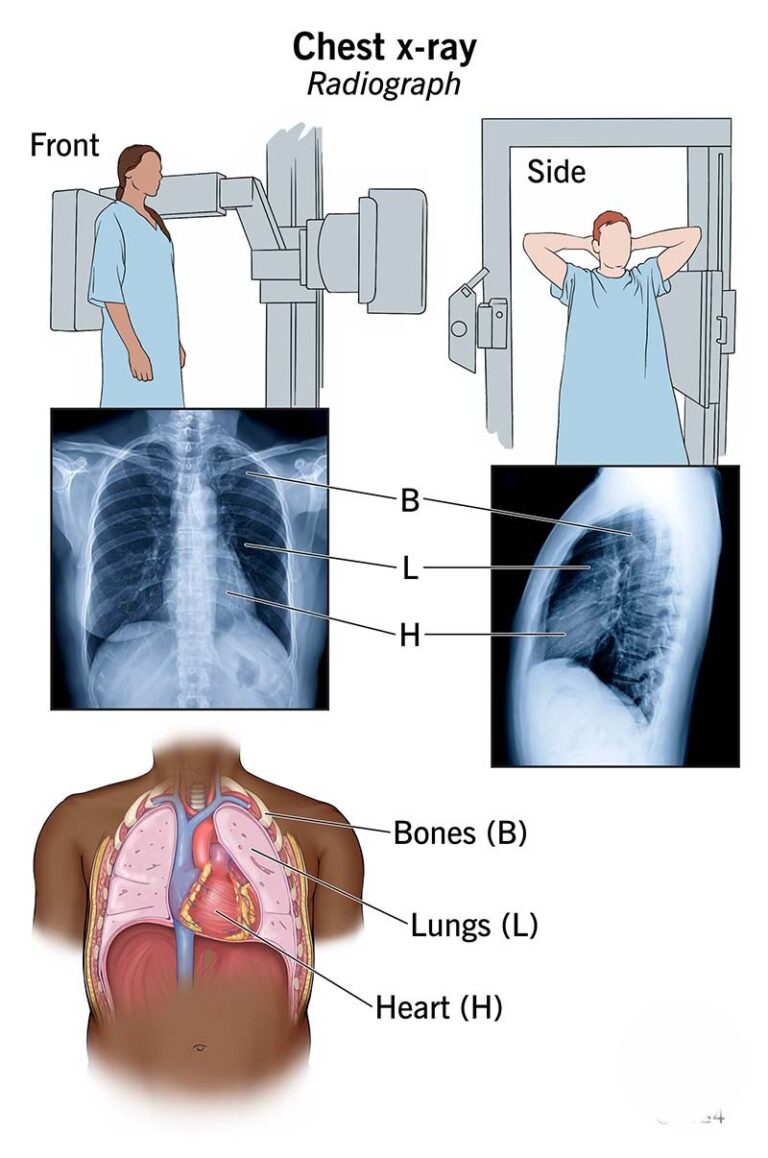
To understand X-rays, it is helpful to know some basic anatomy and physiology. The human body is composed of various tissues with different densities. Bones are dense and absorb more X-rays, appearing white on an X-ray image. Soft tissues like muscles, fat, and organs absorb fewer X-rays and appear in shades of gray, while air-filled spaces such as the lungs appear black. This contrast allows radiologists to interpret X-ray images and identify abnormalities.

Signup our newsletter to get update information, news, insight or promotions.

Causes / Etiology

Symptoms / Clinical Presentation

Diagnosis

The diagnostic process involving X-rays typically includes:

  1. Clinical Examination: A healthcare provider assesses symptoms, medical history, and physical signs.
  2. Ordering the X-ray: Based on clinical suspicion, the appropriate X-ray is requested (e.g., chest, limb, spine).
  3. Image Acquisition: The patient is positioned, and X-rays are taken using specialized equipment.
  4. Image Interpretation: A radiologist or trained physician reviews the images to identify abnormalities.
  5. Additional Tests: If needed, further imaging (CT, MRI) or laboratory tests may be ordered for confirmation.

Treatment Options

X-rays themselves do not treat conditions but guide treatment decisions. Treatment depends on the diagnosis:

  • Non-surgical treatments:
    • Immobilization with casts or splints for fractures.
    • Medications such as antibiotics for infections or analgesics for pain.
    • Physical therapy for rehabilitation.
  • Surgical treatments:
    • Reduction and fixation of complex fractures.
    • Removal of tumors or foreign bodies.
    • Repair of structural abnormalities.

Procedure Details (if surgical or procedural)

When surgery is indicated, X-rays often assist in planning and intraoperative guidance. For example, in fracture fixation:

  1. Preoperative Planning: X-rays help determine fracture type and surgical approach.
  2. Anesthesia: The patient is prepared and anesthetized.
  3. Incision and Exposure: The surgeon accesses the fracture site.
  4. Reduction: Bone fragments are realigned.
  5. Fixation: Plates, screws, or rods are applied to stabilize the bone.
  6. Intraoperative Imaging: Fluoroscopy (real-time X-ray) may be used to confirm alignment.
  7. Closure: The incision is sutured, and a dressing is applied.

Postoperative Care / Rehabilitation

Recovery after procedures guided by X-rays involves:

  • Monitoring: Regular follow-up X-rays to assess healing.
  • Pain Management: Use of medications as prescribed.
  • Immobilization: Continued use of casts or braces if necessary.
  • Physical Therapy: Gradual restoration of movement and strength.
  • Lifestyle Modifications: Avoiding activities that may jeopardize healing.

Risks and Complications

While X-rays are generally safe, potential risks include:

  • Radiation Exposure: Although low, repeated exposure can increase cancer risk.
  • Misdiagnosis: Poor image quality or interpretation errors.
  • Allergic Reactions: Rare, related to contrast agents if used.
  • Surgical Risks: Infection, bleeding, or hardware failure in procedures guided by X-rays.

Prognosis

The prognosis depends on the underlying condition diagnosed by X-ray. Early and accurate diagnosis often leads to effective treatment and good outcomes. For example, simple fractures typically heal well with immobilization, while complex conditions may require prolonged care.

When to See a Doctor

conclusion

X-rays are a cornerstone of modern medical diagnostics, enabling visualization of internal structures to detect a wide range of conditions. Understanding their role, benefits, and limitations helps patients appreciate the importance of timely imaging and follow-up care. Always consult healthcare professionals for appropriate evaluation and treatment based on X-ray findings to ensure the best possible health outcomes.

Explore More:

Welcome to KamalaDevi Hospital

Aenean porta orci nam commodo felis hac ridiculus fusce fames maximus erat sed dictumst blandit arcu suspendisse sollicitudin luctus in nec

Make an Appointment.