During the physical exam, your healthcare professional might move your child’s legs into various positions to check range of motion and see whether any of the positions cause pain.
These types of tests, which are vital to the diagnosis of Perthes disease, might include:
In Perthes disease, the complete healing process can take several years. The types of treatment recommended depend on the:
As Perthes disease gets worse, the ball part of the joint, called the femoral head, weakens and breaks apart. During healing, the socket part of the joint can serve as a mold. This can help the weakened femoral head keep its round shape.
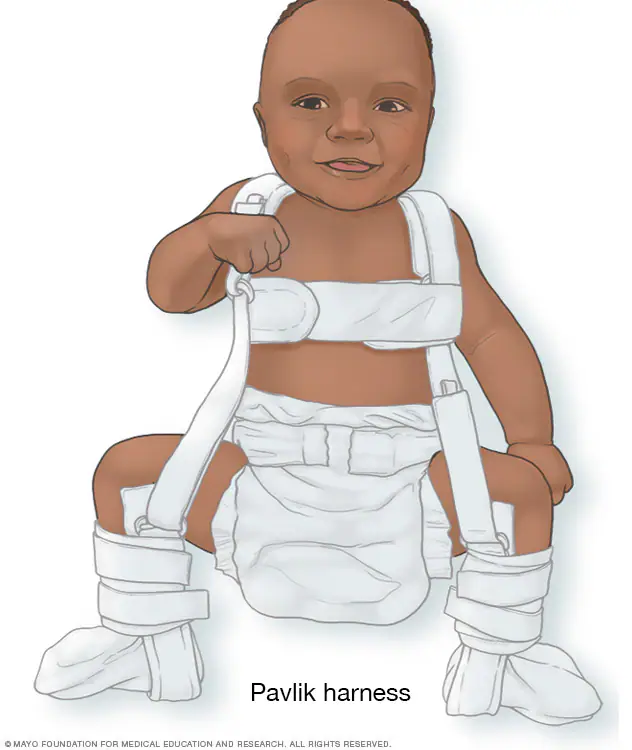
For this molding to work, the femoral head must sit snugly within the socket. Sometimes a child wears a special type of leg cast that spreads the legs widely apart for 4 to 6 weeks to keep the bone in the right position.
Some children need surgery to help keep the ball of the joint snug within the socket. This procedure might involve making wedge-shaped cuts in the thighbone or pelvis to align the joint again.
Surgery generally isn’t needed for children younger than 6. In this age group, the hip socket is naturally more moldable, so the ball and socket usually continue to fit together well without surgery.
Some children, especially very young ones, might need only conservative treatments or observation. Conservative treatments can include:
You’ll probably first talk with your child’s primary care team about your concerns. After an initial evaluation, your child might be referred to a doctor who specializes in bone conditions in children, called a pediatric orthopedic surgeon.
Before your appointment, you may want to write a list of answers to the following questions:
Your healthcare team might ask some of the following questions:
Aenean porta orci nam commodo felis hac ridiculus fusce fames maximus erat sed dictumst blandit arcu suspendisse sollicitudin luctus in nec