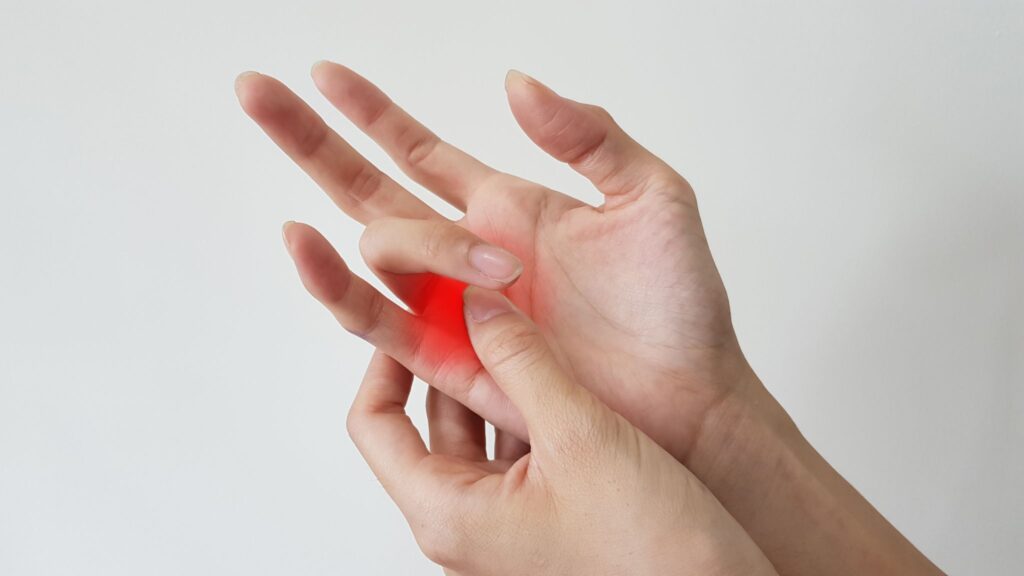
During the exam, a health care provider may ask you to open and close your hand, checking for areas of pain, smoothness of motion and evidence of locking.
Trigger finger treatment varies depending on its severity and duration.
Consider taking a nonsteroidal anti-inflammatory drug, such as ibuprofen (Advil, Motrin IB, others) or naproxen sodium (Aleve). Some types of these medicines can be delivered by creams or patches through the skin right where the problem is happening.
Conservative noninvasive treatments may include:
If your symptoms are severe or if conservative treatments haven’t helped, your health care provider might suggest:
You’ll probably start by seeing your primary care doctor to determine what could be causing your symptoms.
Make sure to bring a list of all the medications and supplements you take regularly. You also might want to write down some questions in advance. Examples may include:
Your health care provider is likely to ask you a number of questions. Being ready to answer them may reserve time to go over important information a second time.
Questions your provider might ask include:
Aenean porta orci nam commodo felis hac ridiculus fusce fames maximus erat sed dictumst blandit arcu suspendisse sollicitudin luctus in nec