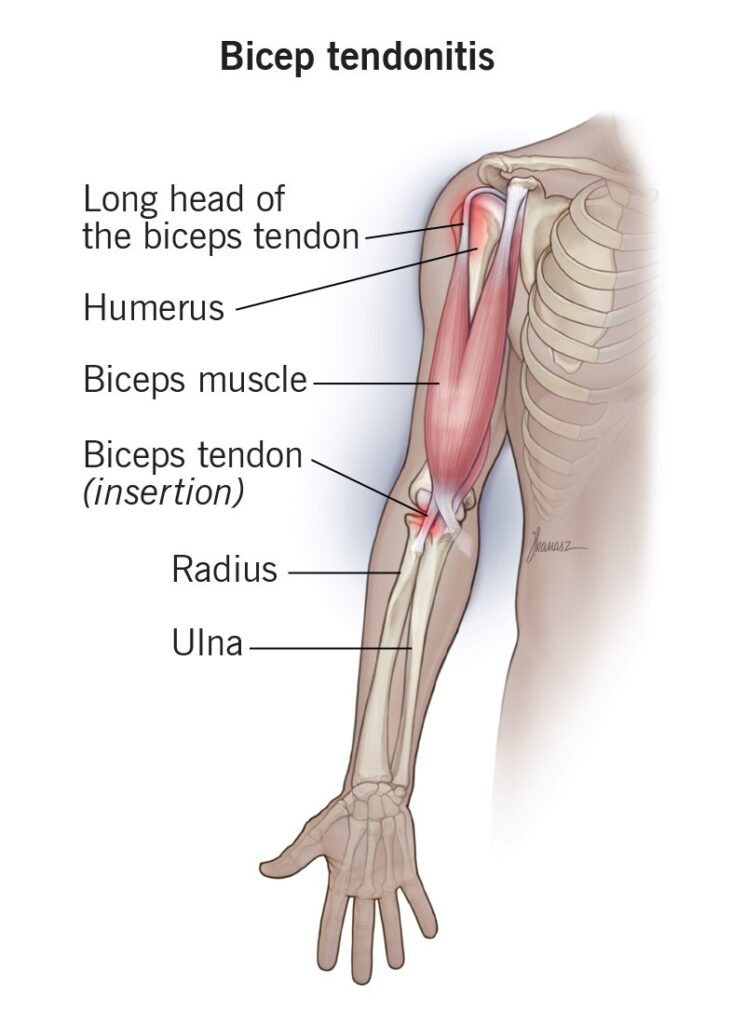
Biceps tendonitis is a condition that occurs when you have inflammation in your upper biceps tendon. This tendon — also known as the long head of the biceps tendon — connects your biceps muscle to your shoulder blade bone. The condition can also occur at your elbow.
This type of tendonitis (also spelled tendinitis) is an overuse injury that often happens due to a repeated overhead motion. For instance, professional baseball players, swimmers, tennis players and golfers are at risk for tendonitis in their shoulders, arms and elbows. Tendonitis can also occur because of a sudden, serious load to the tendon.
Biceps tendinitis doesn’t typically occur alone. It most often happens alongside other shoulder issues, including:
If you have biceps tendonitis, you’ll have bicep pain or tenderness in the area in front of your shoulder. This pain may get worse if you continue to participate in physical activity or try to lift your arm over your head.
You may also have upper arm muscle pain that moves down your upper arm bone. Along with pain and tenderness, you may hear a snapping sound or feel a snapping sensation in your shoulder.
Biceps tendonitis can happen with the wear and tear that you put on your tendons during your usual daily activities. As you get older, these tendons start to wear down and can get worse when you overuse them. When you use the same shoulder motions over and over again, the repeated wear and tear can lead to the condition.
Biceps tendonitis frequently affects athletes because of the repeated overhead motions they make in their sports. Baseball players, tennis players, golfers and swimmers are particularly at risk of developing the condition.
There are several risk factors for developing biceps tendonitis, including:
Severe overuse of your biceps tendons can lead to complications, including biceps tears.
In cases of serious or constant overuse, a tendon may fray and eventually cause a bicep tear. A tendon can also tear as part of an injury, like moving or twisting your elbow or shoulder in an awkward way, or falling down with your arm outstretched. At the elbow, the bicep tendon most often tears while lifting a heavy object (for example, a couch or a refrigerator).
A bicep tendon tear can happen at either the shoulder or the elbow. A tear can also be complete (biceps tendon rupture) or partial. A biceps tendon rupture means the tendon has torn away from the bone.
While two tendons attach the biceps muscle to the bone at the shoulder, only one tendon attaches it to the elbow. This is called the distal biceps tendon.
Tears of the distal biceps tendon are unusual and most often result from an injury or lifting a heavy object. When this tendon tears, however, the tear is usually complete and the muscle is separated from the bone and retracted back. This causes weakness in powerful palm-up activities like tightening a screwdriver with the right hand.
Your healthcare provider will ask about your medical history and symptoms. Then, they’ll perform a physical exam. During the exam, your provider will check the function of your biceps. They’ll also check your shoulder for:
Your healthcare provider may request imaging tests to help them make a diagnosis. These tests may include:
Treatment for biceps tendonitis typically starts with noninvasive (nonsurgical) methods like:
If noninvasive methods don’t help improve your condition, your healthcare provider may suggest surgery. Your provider will likely perform the surgery arthroscopically. That means they’ll insert a small camera (arthroscope) in your shoulder joint to take pictures, which will help them guide the procedure using small surgical instruments.
Surgical options may include:
Overall, complication rates from surgery for biceps tendonitis are low. But surgery can sometimes lead to complications, including:
Recovery time for biceps tendonitis depends on the extent of your injury and method of treatment. With noninvasive treatment, your condition should improve within a few weeks.
If you have surgery, recovery time will take longer. Your healthcare provider will recommend you wear a sling anywhere from one to four weeks, depending on the surgery. You’ll also need physical therapy or some other type of rehabilitation. It may take three to four months for full recovery.
Aenean porta orci nam commodo felis hac ridiculus fusce fames maximus erat sed dictumst blandit arcu suspendisse sollicitudin luctus in nec