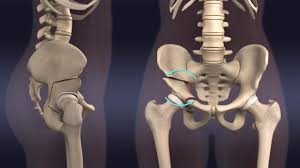
An osteotomy is a surgery that cuts bone to restore more normal alignment. In the hips and knees, this can realign the leg and improve gait and as well as reduce pain. Also, when knee or hip replacement is not a good option due to young age, you may want to consider an osteotomy.
Pain in the hip or knee can be due to a deformity in the femur. This may have stemmed from a childhood disease, such as Legg-Calve Perthes disease or slipped capital femoral epiphysis (SCFE) or dysplasia.
Hip osteotomy surgery (periacetabular osteotomy) involves cutting out or carving around the hip socket to move it to a new and better location. To do this, the surgeon makes an incision over the front of the hip, about six to eight inches long, separating muscles to get to the pelvis. Then with X-ray guidance (fluoroscopy), he carefully cuts through the three pelvic bones (ischium, pubis, ilium) around the hip socket to free it from its original position.
Next the acetabulum is fixed in its new location with screws (usually three to six); a bone graft is used if needed.
Sometimes if the angle made by the femur and head is too low (varus) or too high (valgus), then an osteotomy of the femur may be needed. This helps the femoral head to be in a more normal position to preserve it from wearing out. This surgery is called a proximal femoral osteotomy.
The major risks include the following:
You will be walking within a couple days of surgery, but on one to two crutches for three months, and it usually takes 9–12 months to feel fully recovered.
The hospital stay for an osteotomy is usually two to three days after surgery. When you leave the hospital, you will need 24-hour help for a week. Or if you don’t have adequate help at home, you could consider a rehabilitation center. The final plans will be made while you are recovering in the hospital.
Starting the day after surgery you will have physical therapy twice a day that includes gentle exercises, learning to sit, stand, and walk with partial weight-bearing and crutches. You may take a few steps the first day around your room, and the second day out into the hallway and so on.
After you leave the hospital, the you need to walk, rest, and let your surgery heal. We do not want formal physical therapy for the first six weeks; after that we evaluate your needs on an individual basis.
Baby boys are up to twice as likely to develop clubfoot as baby birls. A family history of clubfoot also puts your baby at a higher risk.
Here is a basic recovery timeline:
You will probably have staples and should see your doctor in two weeks, then again six weeks after surgery for X-rays, then three months, six months, one year, and every year or two so we can see how the hip progresses.
After this, we advise patients to resume what they can tolerate, especially walking, swimming, and bicycle riding. We discourage repetitive jumping, running, and heavy manual labor and lifting. These activities tend to wear out your hip faster.
Usually three to four weeks after surgery (when you’re safe enough to not be at fault if you get in an accident and off narcotics).
We hope to extend the time between now and when you need a hip replacement (total hip arthroplasty). But the exact time in years is unknown and based on the amount of arthritis in your hip already.
Aenean porta orci nam commodo felis hac ridiculus fusce fames maximus erat sed dictumst blandit arcu suspendisse sollicitudin luctus in nec