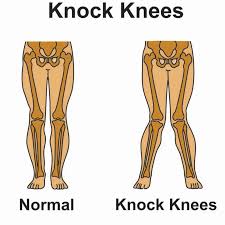
Genu valgum, or knock-knee, is a condition where the knees touch but the ankles do not. It appears most frequently in young children. Depending on the cause, treatment can include medication, exercise, orthotics, and surgery.
Genu valgum is more commonly referred to as knock-knee. When someone with genu valgum stands with their knees together, there is a gap between the ankles of about 8 centimeters (3.1 inches) or more. The knees will appear to push in toward each other.
It is most common in children, typically affecting 3- to 6-year-olds. In most young children, the condition will naturally correct itself by age 7 years. In rare cases, genu valgum may continue into adolescence. In other cases, older children or adults may develop it as a result of an underlying disease or condition.
In instances where it does not resolve on its own, or where genu valgum develops later in life, a person may need formal treatment.
Most of the time, it is not possible to prevent genu valgum. However, various treatment options are available that may help ease some of the symptoms.
It may be possible to prevent knock-knee that develops due to an underlying condition if a doctor can identify and treat the cause.
Treatment for genu valgum will largely depend on the cause and severity of the condition.
Typical treatment options may include some of the following:
If an underlying disease is causing genu valgum, a doctor will need to treat the disease first to correct the leg alignment. They may use medications and supplements as part of a treatment plan.
Several studies indicate that exercise may help strengthen the muscles of the legs and could improve posture and balance in people with knock-knee. Research also shows that this may apply to young adults with knock-knee, but there is not enough research to indicate that exercise corrects the condition in children.
A person should always consult with a doctor before beginning any exercise routine. A doctor or physical therapist will be able to say whether exercises may be helpful and what types of exercises to do based on a person’s gait and specific symptoms.
Examples of resistance and strength exercises that a person can do include:
If a person is carrying excessive body weight, it can contribute to genu valgum. Extra weight puts additional strain on the legs and knees, which can cause knock-knee to worsen.
A doctor will likely recommend that a person who is overweight lose weight through a combination of diet and exercise.
Orthotics are inserts placed in the shoes to help correct a person’s gait or the way their foot strikes the ground when they walk or run. This may be especially helpful for people with genu valgum who have one leg that is longer than the other.
Doctors may recommend braces or splints for some children in addition to or instead of orthotics. The braces are designed to help the bones grow in the correct position.
Surgery is not typically the first treatment choice for a person with genu valgum. Surgery is usually reserved for severe knock-knee and cases where exercise, stretching, and weight loss do not relieve pain.
For children, doctors use a procedure called guided growth surgery. A surgeon inserts a small piece of metal into the knee. This metal plate helps the bone grow in the correct direction. Once the bone is aligned correctly, further surgery is done to remove the metal plate.
Adults and older teens may also have an osteotomy. Similar to guided growth surgery, osteotomy involves a surgeon inserting a small metal plate into the knee. The plate is used as a permanent brace to keep the knee correctly aligned.
In rare cases, a doctor may recommend a knee replacement. In this case, a correctly aligned artificial knee will resolve the genu valgum.
Depending on the type of procedure, whether or not the patient has medical insurance, and the type of insurance, the cost of any surgical procedure can vary significantly. It can also depend on the severity of the patient’s symptoms.
People who have Medicare may pay between $344 and $644 out of pocket for an osteotomy, depending on where the procedure takes place.
The cost of osteotomy or guided growth surgery if a person has other types of insurance is unclear and may depend on the specific insurance plan. In 2018, the average cost of a knee replacement was $35,000, but this is the total cost excluding insurance coverage.
There is not always an obvious cause of genu valgum, but there are several potential causes, including metabolic bone disorders and genetic disorders. However, most cases of genu valgum are harmless.
Risk factors for genu valgum include:
Symptoms of genu valgum include a clear visual separation of the ankles when the knees are together. An individual’s gait may be affected as they compensate for the lack of a gap between their knees.
This will appear as a limp and problems with balance while walking. A person will typically not experience any symptoms but may have occasional pain in the knees, feet, hip, or ankle.
Diagnosis typically begins with a physical examination in which a doctor examines the person and takes a detailed medical history. If the person with symptoms is a child, the doctor will look at the growth trajectory of their legs.
If pain is present, a doctor will likely ask the person to describe its location, severity, and frequency.
The doctor will also look at:
A doctor may look for uneven wear patterns on the soles of a person’s shoe as well. In some cases, a doctor may order an MRI or X-ray to examine the bone structure.
The doctor also needs to determine whether there is an underlying cause. If there is none, the doctor will usually recommend waiting to see if the condition resolves on its own.
Bowleggedness is similar to knock-knee, and its Latin name is genu varum. They are both most common in early childhood.
Bowlegs are knees that curve out, creating less space between the ankles. Bowlegs are the opposite of knock-knees, which curve inward and increase the space between the ankles.
While knock-knee most commonly affects children ages 3–6 years, it is uncommon for bowlegs to persist after age 2 years. Both conditions can have natural and disease-based causes.
Aenean porta orci nam commodo felis hac ridiculus fusce fames maximus erat sed dictumst blandit arcu suspendisse sollicitudin luctus in nec