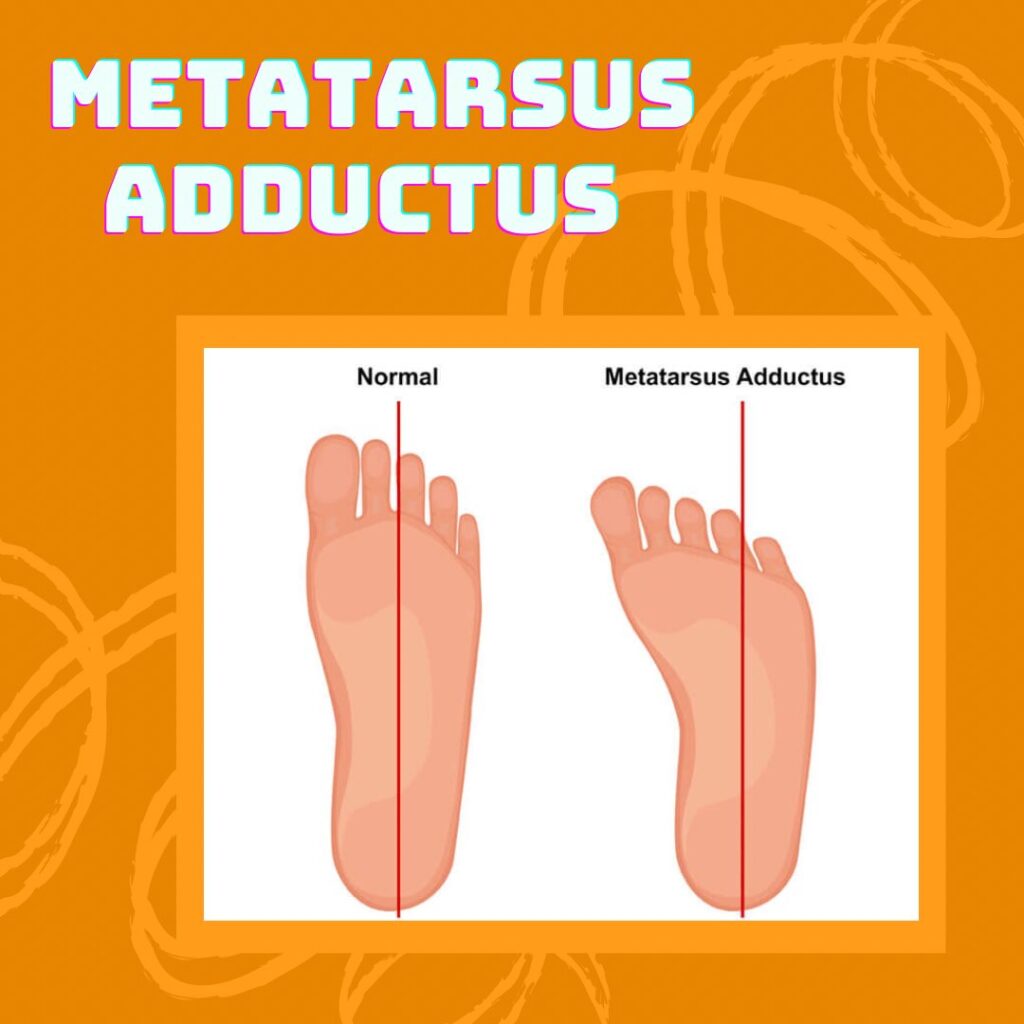
Metatarsus adductus is a condition some babies are born with. The bones and tissue of the front part of the foot and toes curve inward. Many babies grow out of metatarsus adductus on their own, or healthcare providers can treat the condition with stretching exercises, casts and corrective shoes. Rarely, surgery is needed to correct the condition.
Metatarsus adductus is a condition some babies are born with (congenital). It causes an inward curve from the middle of their foot to their toes.
Metatarsus adductus usually affects infants. It can affect one or both feet. If you have metatarsus adductus in adulthood, the condition has likely been present since you were born.
Metatarsus adductus is the most common foot deformity that healthcare providers see in babies. About 1 in 1,000 babies are born with this birth defect. But some studies say it’s more common than that, and up to 12% of babies are born with metatarsus adductus.
Most babies grow out of metatarsus adductus on their own or with stretching or other treatment. Some babies born with this condition may also have developmental hip dysplasia.
Like metatarsus adductus, clubfoot is a congenital foot condition. Babies with clubfoot have changes in the tendons that connect the muscles and bones of their leg and foot. Tight, short tendons cause the baby’s foot to turn in so severely that the bottom (sole) of the foot faces up or sideways.
Skew foot is another congenital condition that can affect a baby’s feet. In skew foot, the bones of the toes and heels form a Z shape. This condition can cause trouble with walking (gait disorders).
Healthcare providers aren’t sure why some children develop metatarsus adductus. The condition may run in families (genetic disorder). Other causes may include:
Metatarsus adductus causes the outer edge of the foot and the toes to turn in. This curved shape may be mild or severe. In some children, the feet become rigid.
Your child’s healthcare provider may notice a curve in your child’s foot during a well-baby care visit. Or, as your child begins to walk, you may notice signs of metatarsus adductus, like their feet turning in (pigeon toes or intoeing).
Healthcare providers diagnose metatarsus adductus with a physical examination. Your provider may recommend an X-ray if your child’s foot is rigid.
Many babies grow out of metatarsus adductus by their first birthday without any treatment. If your child’s feet are rigid or the foot curve is severe, your healthcare provider may recommend consulting a pediatric orthopaedist. An orthopaedist specializes in treating problems of your skeletal system, which includes bones, ligaments and tendons.
Your healthcare provider may recommend metatarsus adductus treatment if your child’s feet remain curved by their first birthday. They may also recommend treatment if the feet are rigid.
Your child’s healthcare provider may straighten your child’s feet with:
Your provider may recommend that you do stretching exercises with your child’s feet. If metatarsus adductus doesn’t resolve by about age 10, your healthcare provider may recommend surgery.
If your feet curve inward or you have trouble walking, see a doctor specializing in foot problems (podiatrist). While the condition is rare in adults, your provider may recommend special shoes to help correct metatarsus adductus.
Aenean porta orci nam commodo felis hac ridiculus fusce fames maximus erat sed dictumst blandit arcu suspendisse sollicitudin luctus in nec