
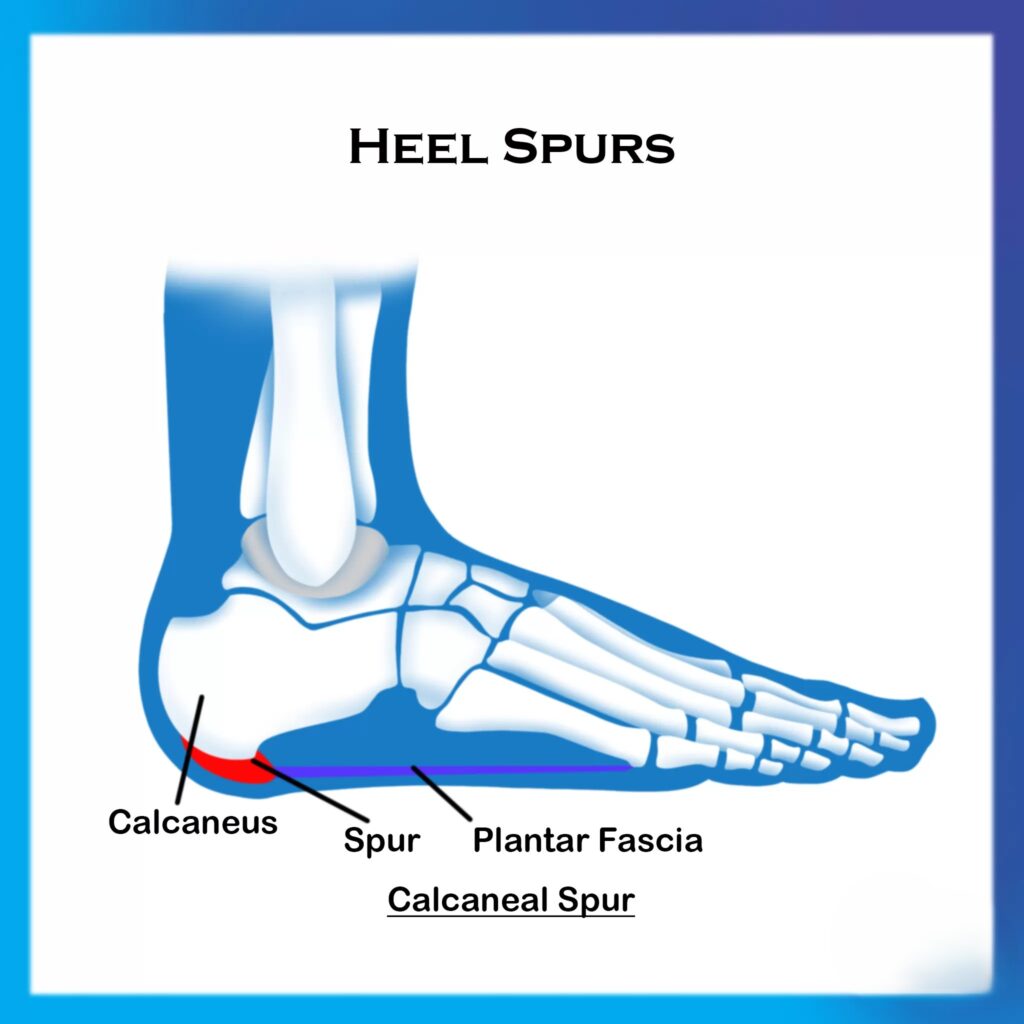
A heel spur is a bony growth that pokes out below your back heel bone inside your foot. Heel spurs happen when there’s stress on your foot ligaments. Most people don’t realize they have a heel spur until they seek help for heel pain. Heel spurs can’t be cured. Healthcare providers recommend non-surgical treatments to ease symptoms associated with heel spurs.
A heel spur or bone spur is a bony growth that pokes out from the bottom of your heel, where your heel bone connects to the ligament running between your heel and the ball of your foot (the plantar fascia). Heel spurs affect about 15% of people.
Heel spurs develop over time. Most people don’t realize they have a heel spur until they seek help for heel pain. While heel spurs can be removed with surgery, healthcare providers recommend non-surgical treatments to ease symptoms associated with heel spurs.
Heel spurs and plantar fasciitis are related conditions but they're not the same. Here’s how the two conditions intersect:
Heel spurs are your body’s response to stress and strain placed on your foot ligaments and tendons. For example, when you develop plantar fasciitis, your body responds to the stress by creating a heel spur.
You can also develop heel spurs by repeatedly tearing the covering that lines your heel bone or if you have a gait disorder. (A gait disorder is when an illness or condition affects your balance and coordination so you can’t walk as you usually do.)
Healthcare providers typically examine your foot and ask about physical activity that might have caused your heel pain. Ultimately, X-rays are one of the most common tests that healthcare providers use to diagnose heel spurs.
Healthcare providers treat heel spurs the same way they treat plantar fasciitis. That’s because heel pain blamed on heel spurs is actually caused by plantar fasciitis. Treating the symptoms of plantar fasciitis can ease pain associated with heel spurs. Typical treatment includes:
Your heel spur might be removed as part of plantar fasciitis surgery, but healthcare providers rarely perform surgery to remove heel spurs.
Once formed, heel spurs are permanent. Surgery is the only way to remove a heel spur. Since heel spurs usually don’t hurt, treating the condition that caused your heel spur should help ease your heel pain.
Aenean porta orci nam commodo felis hac ridiculus fusce fames maximus erat sed dictumst blandit arcu suspendisse sollicitudin luctus in nec