
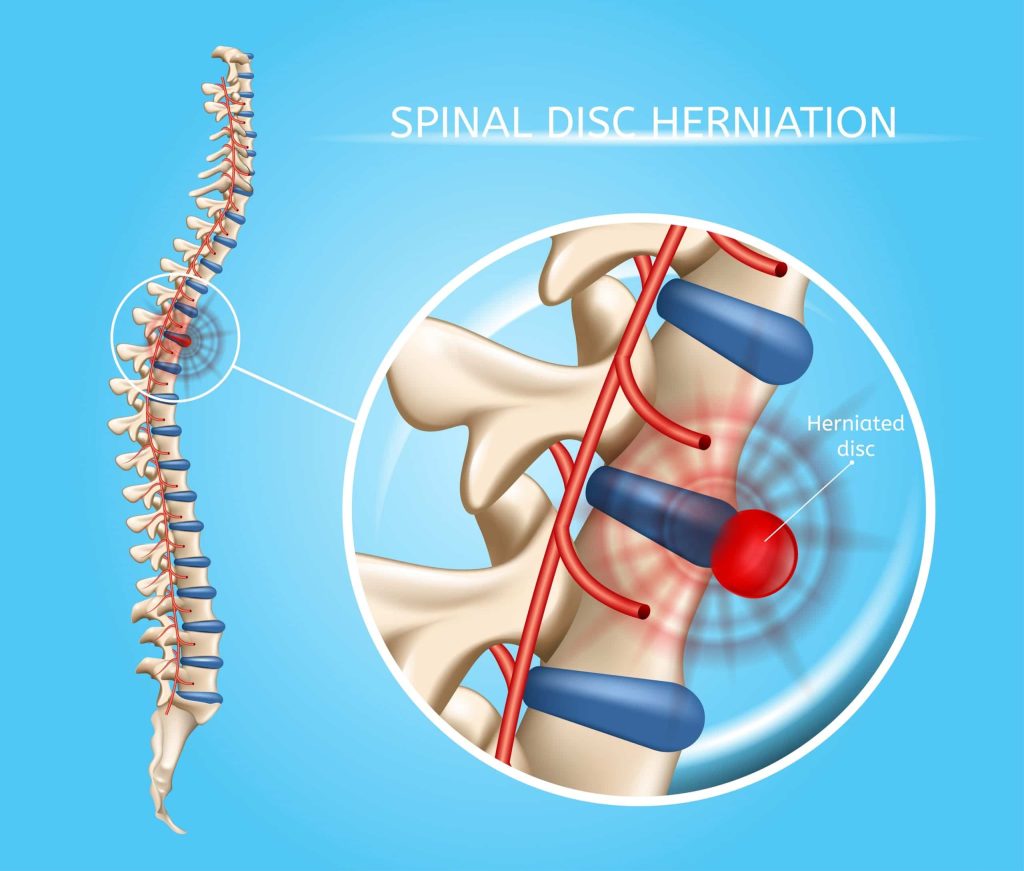
During the physical exam, your health care professional will check your back for tenderness. You might be asked to lie flat and move your legs into various positions to help determine the cause of your pain.
Your doctor also may perform a neurological exam to check your:
In most cases of herniated disk, a physical exam and a medical history are all that are needed for a diagnosis. If your health care professional suspects another condition or needs to see which nerves are affected, you may have one or more of the following tests.
Nerve conduction studies and electromyograms (EMGs) measure how well electrical impulses are moving along nerve tissue. This can help pinpoint the location of nerve damage.
Conservative treatment includes changing activities to stay away from movement that causes pain and taking pain medicines. This treatment relieves symptoms in most people within a few days or weeks.
Your health care team might suggest physical therapy to help with your pain. Physical therapists can show you positions and exercises designed to minimize the pain of a herniated disk.
Few people with herniated disks require surgery. If conservative treatments fail to improve your symptoms after six weeks, surgery may be an option, especially if you continue to have:
In nearly all cases, surgeons can remove just the protruding portion of the disk. Rarely, the entire disk must be removed. In these cases, the vertebrae might need to be fused with a bone graft.
To allow the process of bone fusion, which takes months, metal hardware is placed in the spine to provide spinal stability. Rarely, your surgeon might suggest the implantation of an artificial disk.
Aenean porta orci nam commodo felis hac ridiculus fusce fames maximus erat sed dictumst blandit arcu suspendisse sollicitudin luctus in nec