
Kamala Devi Hospital

Parathyroid Hormone (PTH)

Parathyroid Hormone (PTH): A Comprehensive Overview

Parathyroid hormone (PTH) is a critical regulator of calcium and phosphate metabolism in the human body. Secreted by the parathyroid glands, PTH plays a vital role in maintaining stable blood calcium levels, which are essential for numerous physiological processes including bone health, muscle function, nerve conduction, and blood clotting. Dysregulation of PTH secretion can lead to significant clinical conditions such as hyperparathyroidism or hypoparathyroidism, impacting overall health and quality of life. Understanding PTH’s function, causes of its imbalance, clinical presentation, and treatment options is essential for both healthcare professionals and patients.

Anatomy / Background

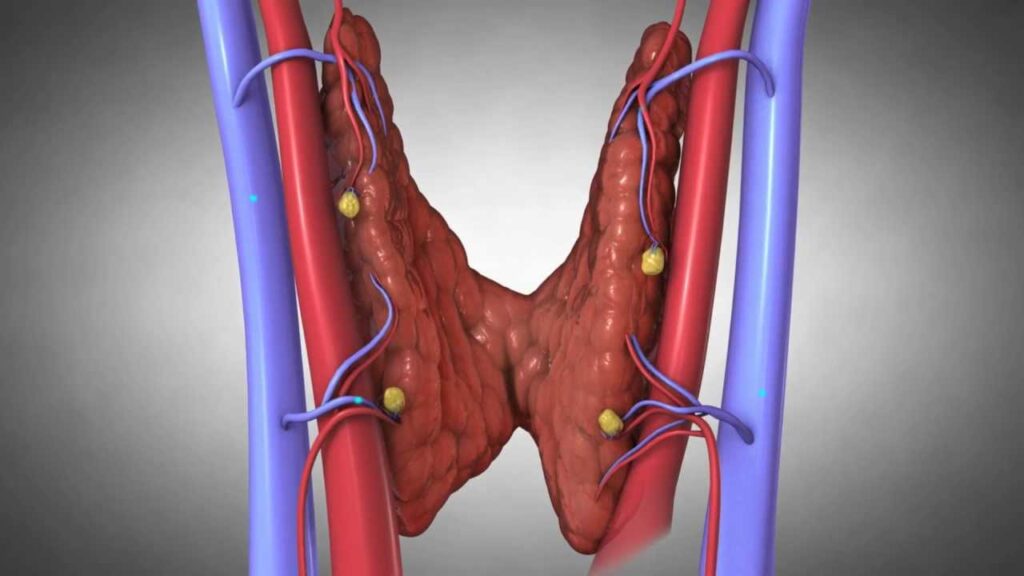
The parathyroid glands are four small, pea-sized endocrine glands located on the posterior surface of the thyroid gland in the neck. Despite their proximity to the thyroid, they have a distinct function: producing and secreting parathyroid hormone. PTH acts primarily on three target organs:

  • Bones: Stimulates osteoclasts to break down bone matrix, releasing calcium into the bloodstream.
  • Kidneys: Increases calcium reabsorption and decreases phosphate reabsorption, while stimulating the production of active vitamin D (calcitriol).
  • Intestines: Indirectly increases calcium absorption by promoting calcitriol synthesis.

Together, these actions maintain serum calcium within a narrow physiological range, typically between 8.5 and 10.5 mg/dL.

Causes / Etiology

Hyperparathyroidism (Excess PTH)

Hypoparathyroidism (Deficient PTH)

Symptoms / Clinical Presentation

Hyperparathyroidism
  • Mild cases: Often asymptomatic and detected incidentally.
  • Symptomatic cases: May present with “stones, bones, groans, and psychiatric overtones”:
    • Stones: Kidney stones due to hypercalciuria.
    • Bones: Bone pain, osteoporosis, fractures.
    • Groans: Abdominal pain, nausea, constipation, peptic ulcers.
    • Psychiatric overtones: Fatigue, depression, cognitive disturbances.
Hypoparathyroidism
  • Symptoms primarily result from hypocalcemia:
    • Muscle cramps, tetany (involuntary muscle contractions).
    • Paresthesias (tingling sensations), especially around the mouth and in the extremities.
    • Seizures in severe cases.
    • Cardiac arrhythmias due to prolonged QT interval.

Diagnosis

Diagnosis involves a combination of clinical evaluation and laboratory investigations:

  • Serum calcium: Elevated in hyperparathyroidism; low in hypoparathyroidism.
  • Serum PTH levels: Elevated in primary and secondary hyperparathyroidism; low or inappropriately normal in hypoparathyroidism.
  • Serum phosphate: Low in hyperparathyroidism; high in hypoparathyroidism.
  • Vitamin D levels: To assess for deficiency.
  • 24-hour urinary calcium: Helps differentiate causes of hypercalcemia.
  • Imaging: Ultrasound or sestamibi scan to localize parathyroid adenomas.
  • Bone density scans: To evaluate bone loss.

Treatment Options

Hyperparathyroidism

  • Non-surgical:
    • Monitoring in asymptomatic patients with mild disease.
    • Hydration and avoidance of medications that increase calcium.
    • Medications such as bisphosphonates or calcimimetics (e.g., cinacalcet) to control calcium levels.
  • Surgical:
    • Parathyroidectomy is the definitive treatment for symptomatic primary hyperparathyroidism or significant hypercalcemia.

Hypoparathyroidism

  • Calcium supplementation: Oral calcium carbonate or citrate.
  • Active vitamin D analogs: Such as calcitriol to enhance calcium absorption.
  • Magnesium correction: If deficient.
  • PTH replacement therapy: Recombinant PTH may be used in refractory cases.

Procedure Details (Parathyroidectomy)

Parathyroidectomy involves the surgical removal of one or more parathyroid glands:

  1. Preoperative localization: Imaging to identify abnormal glands.
  2. Anesthesia: General anesthesia is administered.
  3. Incision: A small incision is made in the lower neck.
  4. Exploration: The surgeon identifies and assesses all parathyroid glands.
  5. Removal: The abnormal gland(s) are excised.
  6. Intraoperative PTH monitoring: Rapid PTH assays may be used to confirm removal of hyperfunctioning tissue.
  7. Closure: The incision is closed with sutures.

Minimally invasive techniques may be used depending on localization and surgeon expertise.

Postoperative Care / Rehabilitation

  • Monitoring: Serum calcium levels are closely monitored to detect hypocalcemia.
  • Calcium and vitamin D supplementation: May be required temporarily or long-term.
  • Wound care: Keep the surgical site clean and dry.
  • Activity: Patients are usually encouraged to resume normal activities gradually.
  • Follow-up: Regular follow-up to monitor calcium, PTH, and bone health.

Risks and Complications

  • Hypocalcemia: Due to “hungry bone syndrome” or inadvertent removal/damage to normal glands.
  • Recurrent laryngeal nerve injury: Can cause hoarseness or voice changes.
  • Bleeding or hematoma: May require urgent intervention.
  • Infection: Rare but possible.
  • Persistent or recurrent hyperparathyroidism: If abnormal tissue remains.

Prognosis

  • Primary hyperparathyroidism: Excellent prognosis after successful surgery; most patients experience symptom resolution and normalization of calcium.
  • Secondary hyperparathyroidism: Depends on underlying cause; management of kidney disease is crucial.
  • Hypoparathyroidism: Chronic condition requiring lifelong management; good quality of life with appropriate treatment.

When to See a Doctor

conclusion

Parathyroid hormone is essential for calcium homeostasis and overall metabolic balance. Disorders of PTH secretion, whether excess or deficiency, can lead to significant health issues but are often manageable with timely diagnosis and appropriate treatment. If you experience symptoms suggestive of parathyroid dysfunction or have risk factors, consulting a healthcare professional is crucial. Advances in medical and surgical therapies continue to improve prognosis and quality of life for affected individuals.

Welcome to KamalaDevi Hospital

Aenean porta orci nam commodo felis hac ridiculus fusce fames maximus erat sed dictumst blandit arcu suspendisse sollicitudin luctus in nec

Make an Appointment.