
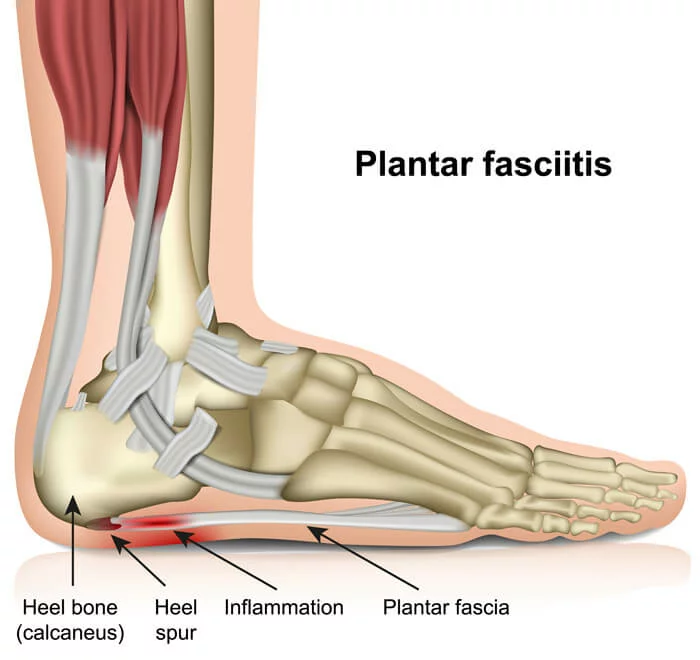
Plantar fasciitis is diagnosed based on your medical history and physical exam. During the exam, your health care professional will check for areas of tenderness in your foot. The location of your pain can help determine its cause.
Usually no tests are needed. Your health care professional might suggest an X-ray or MRI to make sure another problem, such as a stress fracture, is not causing your pain.
Sometimes an X-ray shows a piece of bone sticking out from the heel bone. This is called a bone spur. In the past, these bone spurs were often blamed for heel pain and removed surgically. But many people who have bone spurs on their heels have no heel pain.
Most people who have plantar fasciitis recover in several months with conservative treatment, such as icing the painful area, stretching, and modifying or staying away from activities that cause pain.
Pain relievers you can buy without a prescription such as ibuprofen (Advil, Motrin IB, others) and naproxen sodium (Aleve) can ease the pain and inflammation of plantar fasciitis.
Physical therapy or using special devices might relieve symptoms. Treatment may include:
If more-conservative measures aren’t working after several months, your health care professional might recommend:
To reduce the pain of plantar fasciitis, try these self-care tips:
Your health care professional might refer you to someone who specializes in foot disorders or sports medicine.
Make a list of:
For plantar fasciitis, basic questions to ask your health care team include:
Don’t hesitate to ask other questions.
Your health care professional is likely to ask you questions, such as:
Aenean porta orci nam commodo felis hac ridiculus fusce fames maximus erat sed dictumst blandit arcu suspendisse sollicitudin luctus in nec