
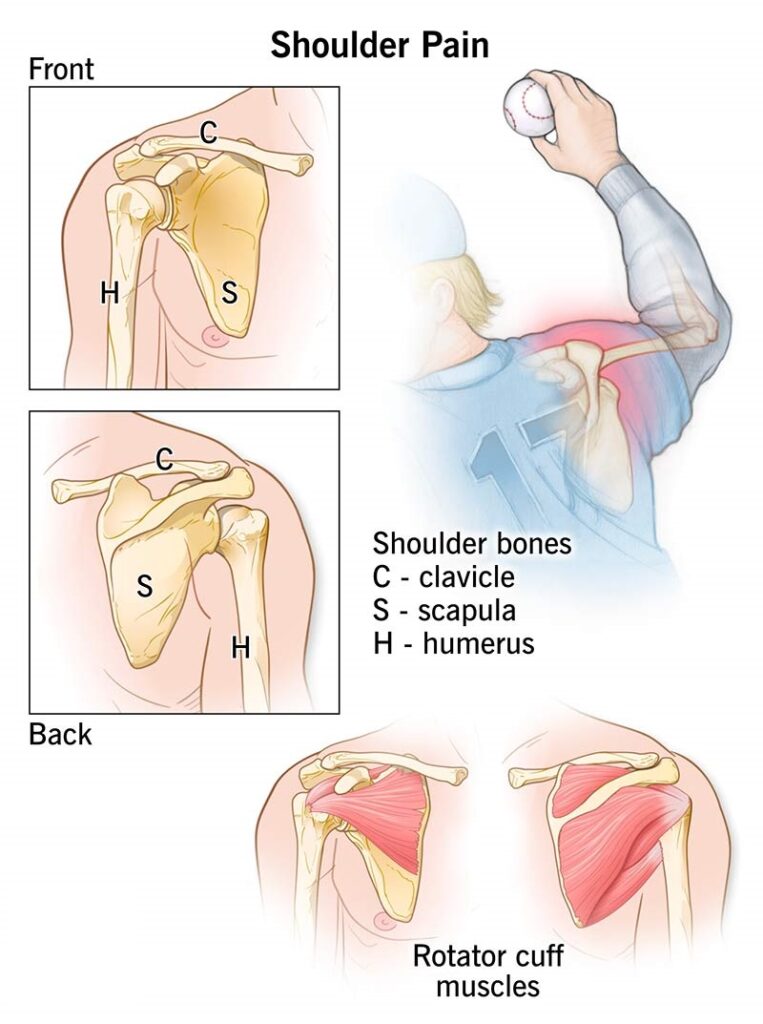
Shoulder impingement happens when bones in your shoulder rub against or pinch your rotator cuff. It happens when swelling in your shoulder makes your rotator cuff too big to fit comfortably between your bones. There are a few different types, including rotator cuff tendinitis.
Shoulder impingement happens when the top outer edge of your shoulder blade (scapula) pinches your rotator cuff beneath it. Healthcare providers sometimes also call it impingement syndrome or shoulder impingement syndrome. Impingement is the medical term for pinching or rubbing together inside a joint. It causes pain, especially when you move.
Your rotator cuff is a group of four muscles that connects your shoulder blade to your upper arm bone (humerus). You use your rotator cuff to raise your arm overhead and to rotate your arm toward and away from your body.
The rotator cuff sits in a small space between your humerus and the acromion (the upper part of your shoulder blade). This makes your rotator cuff susceptible to being pinched between these bones. That pinching is shoulder impingement.
Visit a healthcare provider if you’re experiencing shoulder pain or can’t move your shoulder without pain.
A healthcare provider might classify shoulder impingement as a more specific issue, including:
Experts estimate that shoulder impingement causes around half of all cases of shoulder pain. It’s especially common among athletes and people who do physically demanding work.
Shoulder pain is the most common shoulder impingement symptom.
This usually feels like it comes from the front of your shoulder. The pain may also:
Shoulder impingement pain may get worse during certain movements or positions, including when you:
You might experience different symptoms depending on which type of shoulder impingement you have. For example, in addition to shoulder pain, rotator cuff tendinitis can cause other symptoms, including:
Shoulder impingement is almost always an overuse injury. This means it happens over time when an activity or motion repeatedly puts too much stress on your shoulder joint and rotator cuff.
Healthcare providers call the kinds of movements that cause shoulder impingement overhead rotation motions — any repetitive motion that requires you to twist and turn your shoulders with your arms raised. Training for a sport or performing the same type of movement all day at work are the most common causes.
Some people develop shoulder impingement without an obvious cause (idiopathically). It’s also possible for trauma (like a fall, car accident or sports injury) to cause impingement suddenly.
Anyone can experience shoulder impingement, but athletes and people who do physical work are more likely to. It usually develops slowly over weeks or months.
Sports that can cause shoulder impingement include:
Any physical job that puts pressure on your shoulders can lead to shoulder impingement, including:
A healthcare provider will diagnose shoulder impingement with a physical exam. They’ll examine your shoulder and check your range of motion (how far you can move your shoulder without pain). Tell your provider what you were doing when you first noticed pain and other symptoms. Make sure to mention any sports, hobbies or work you do that use repetitive shoulder and arm motions.
Your provider might use imaging tests to take pictures of your shoulder joint, including:
Imaging tests will help your provider see the bones and tissue in your shoulder joint. They’ll also help your provider diagnose specific causes of impingement.
These tests may also help rule out other causes of shoulder pain, including:
Your provider will suggest treatments that manage your symptoms and help your shoulder heal and regain its usual function. The most common shoulder impingement treatments include:
Your provider might recommend surgery if other treatments don’t relieve your symptoms. Your surgeon might perform an arthroscopic shoulder decompression. They’ll remove part of your acromion to create more space for your rotator cuff.
Your surgeon will tell you which procedure you’ll need and what to expect as you recover.
Rotator cuff tendinitis treatments usually include all the same treatments for other types of shoulder impingement. Your provider will suggest the best ways to help your rotator cuff tendons heal.
Most people with shoulder impingement start feeling better a few weeks after they start treatment. Don’t resume playing sports or doing any intense physical activity before your provider says it’s safe, even if your symptoms improve.
Aenean porta orci nam commodo felis hac ridiculus fusce fames maximus erat sed dictumst blandit arcu suspendisse sollicitudin luctus in nec