
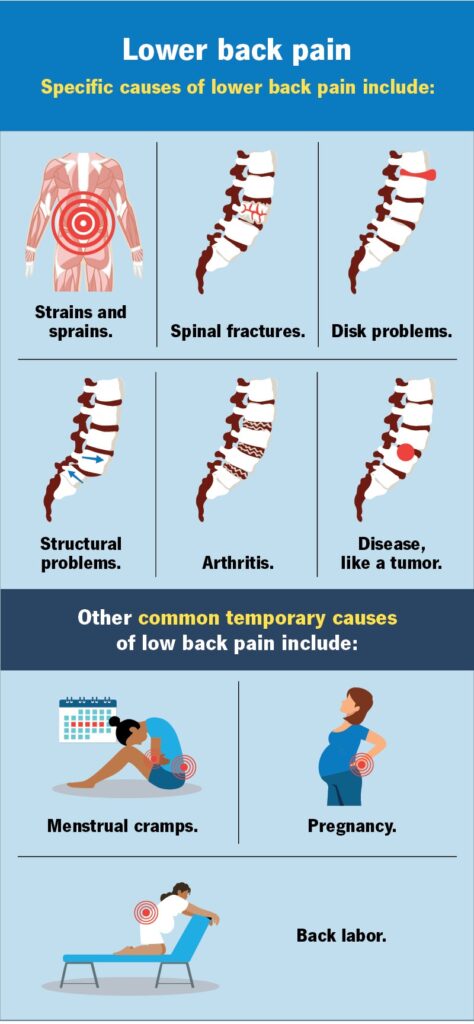
Lower back pain is very common. It often results from a strain (injury) to muscles or tendons in your back. Other causes include arthritis, structural problems and disk injuries. The pain often gets better with rest, physical therapy and/or medication.
Nearly everyone experiences lower back pain at some point in their lives. The pain can range from mild to severe. For most, it’s temporary. But long-lasting (chronic) lower back pain is also common — up to 23% of adults worldwide have chronic lower back pain. In extreme cases, lower back pain can make it difficult or impossible to walk, sleep, work or do everyday activities.
Given how common it is, it may be hard to tell if you should be worried about your lower back pain. Trust your gut and reach out to a healthcare provider if something feels off — or if the pain keeps you from going about your usual activities.
Lower back pain can involve a wide spectrum of symptoms. Lower back pain may:
Other symptoms of lower back pain can include:
If you have severe pain and/or lower back pain that keeps you from doing daily activities, reach out to a healthcare provider.
Many injuries and conditions can cause lower back pain. This kind of pain is so common because your lumbar (low back) vertebrae (bones) do a lot to support your body, including:
With all these important functions, any issue with the structures in your lower back can lead to pain. Specific causes of lower back pain include:
Other common temporary causes of lower back pain include:
Some people are more likely to have lower back pain than others. Risk factors for lower back pain include:
Your healthcare provider will ask about your symptoms and medical history and do a physical exam. Your provider may recommend a variety of tests to check your spine for injuries and assess your health in other ways. Tests may include:
Because there are so many possible causes of low back pain, it may take time to find the correct diagnosis.
Many cases of mild to moderate lower back pain get better with rest, ice and over-the-counter (OTC) pain relievers. After a few days of rest, you should be able to get back to your normal activities. Staying active increases blood flow to the area and helps you heal.
If your back pain is severe and/or happens after a traumatic accident, like a fall, you should seek medical treatment as soon as possible.
Other treatments for lower back pain depend on the underlying cause, severity and how long you’ve had pain. They may include:
It may take time to find the best treatment for you, especially if you have chronic lower back pain. Your provider will be by your side throughout the process.
Aenean porta orci nam commodo felis hac ridiculus fusce fames maximus erat sed dictumst blandit arcu suspendisse sollicitudin luctus in nec