
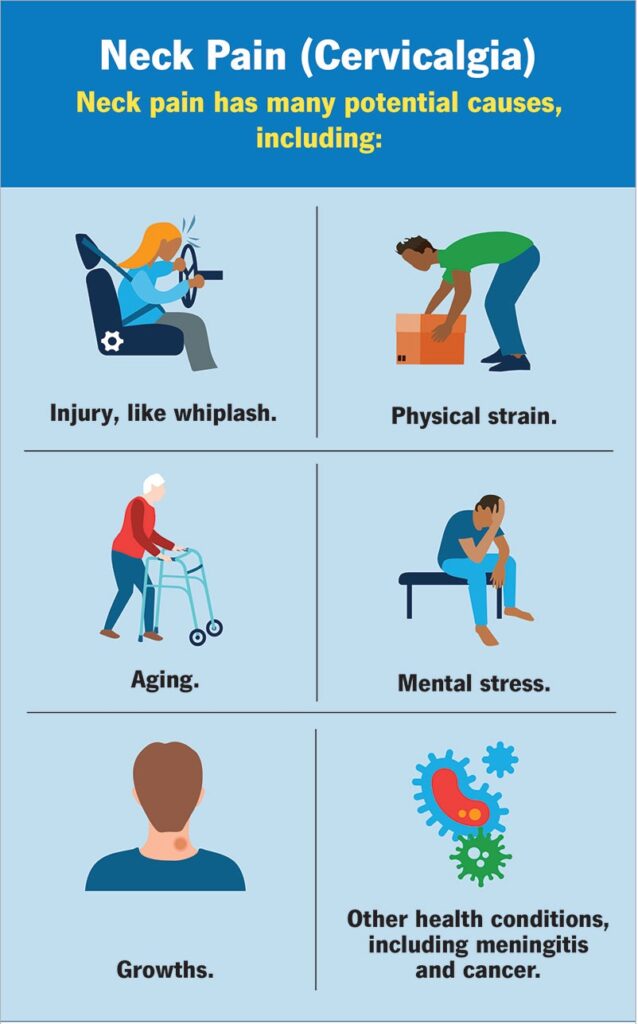
Neck pain, or cervicalgia, can last from days to years, depending on the cause. Common causes include physical strain, poor posture, mental stress, osteoarthritis, spinal stenosis, herniated disk, pinched nerve, tumors and other health conditions.
Neck pain, sometimes called cervicalgia, is pain in or around your spine beneath your head. Your neck is also known as your cervical spine. Neck pain is a common symptom of many different injuries and medical conditions.
You might have axial neck pain (felt mostly in your neck) or radicular neck pain (pain that shoots into other areas, such as your shoulders or arms). It can be acute (lasting from days to six weeks) or chronic (lasting longer than three months).
Neck pain can interfere with your daily activities and reduce your quality of life if it’s not treated.
Fortunately, most causes of neck pain aren’t serious and improve with conservative treatments, like pain medicine, exercise and stress management.
Some people describe the pain as:
Neck pain may involve other symptoms, including:
Neck pain is common, affecting 10% to 20% of adults. It’s more common in women. Your chance of developing it increases with age.
Neck pain has many potential causes, including:
Usually, a medical history and a physical exam are enough for a healthcare provider to diagnose the cause of neck pain. A healthcare provider will first eliminate serious causes of neck pain, like pressure on your spinal cord, myelopathy, an infection or cancer.
In rare instances, your provider may order additional tests, including:
Treatment aims to relieve your pain and improve movement in your neck. Most causes of neck pain eventually improve and can be managed at home. Your provider will suggest treatments to manage your symptoms, including:
If your pain is severe, you may need to work with a spine or pain specialist.
In addition to taking pain relief medications, you can take steps at home to relieve neck pain, including:
Healing time depends on what’s causing your neck pain. Neck pain caused by common issues like strains and stress usually improves within a week or two. It may take a few months before the pain disappears entirely.
You can take steps to prevent neck pain related to strains and tense muscles.
Exercises that can help strengthen your upper back extensor muscles include:
Contact a healthcare provider if you have neck pain that interferes with work or other daily activities. In rare cases, neck pain can be a sign of a medical emergency.
Seek urgent medical care if your neck pain:
Aenean porta orci nam commodo felis hac ridiculus fusce fames maximus erat sed dictumst blandit arcu suspendisse sollicitudin luctus in nec