
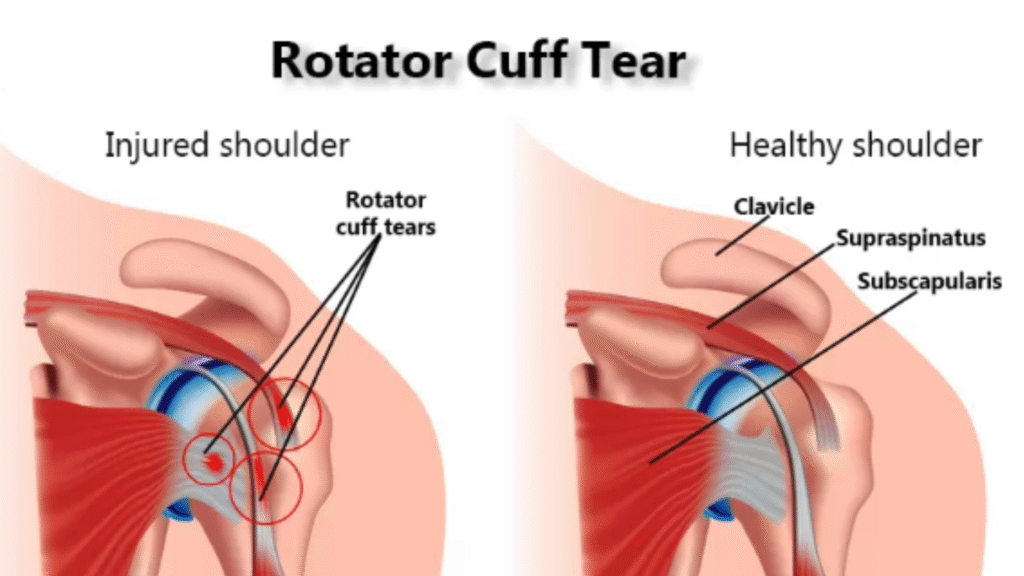
A physical exam is the first step to diagnosing rotator cuff injuries. During the exam, a healthcare professional will press on different parts of the affected shoulder and move the arm into different positions. They’ll also test the strength of the muscles around the shoulder and in the arms.
Imaging tests also may help diagnose rotator cuff injuries. Imaging tests may include:
Conservative treatments — such as rest, ice and physical therapy — sometimes are all that’s needed to recover from a rotator cuff injury. If your injury is severe, you might need surgery.
Physical therapy is usually one of the first treatments suggested. Exercises tailored to the specific location of your rotator cuff injury can help restore flexibility and strength to your shoulder. Physical therapy also is an important part of the recovery process after rotator cuff surgery.
An injection into the shoulder joint might be helpful. Injections are especially helpful if the pain is interfering with sleep, daily activities or physical therapy. While such shots often provide temporarily relief, they also can weaken the tendon and reduce the success of future shoulder surgery.
Many different types of surgeries are available for rotator cuff injuries, including:
The pain from a minor rotator cuff injury often diminishes on its own, with proper care. Stop doing what caused the pain and try to avoid painful movements. Limit heavy lifting or overhead activity until the shoulder pain subsides. Icing the shoulder may help it feel better. Over-the-counter pain relievers such as ibuprofen (Advil, Motrin IB, others) or acetaminophen (Tylenol, others) also may be helpful.
You’ll probably start by seeing your family healthcare professional or sports medicine physician. If your injury is severe, you might be referred to an orthopedic surgeon. If you’ve been treated for a similar problem in the past, you may need to bring past records and imaging studies with you to your appointment.
Before the appointment, you might want to write a list that answers the following questions:
Your healthcare professional is likely to ask you a number of questions. Being ready to answer them may reserve time to go over any points you want to spend more time on. Your doctor may ask:
Aenean porta orci nam commodo felis hac ridiculus fusce fames maximus erat sed dictumst blandit arcu suspendisse sollicitudin luctus in nec